
Climbs
Mt. Kilimanjaro – 1986
Before Ted ever set foot on Africa’s tallest mountain, he had to conquer a different peak — his fear of flying.
Years earlier, Ted had been on an Air National Guard plane that suddenly lost cabin pressure. Passengers became violently ill, and Ted ended up in a San Antonio hospital, retching bile. After that terrifying experience, airplanes became his enemy. On his European honeymoon with Vivian, every landing made him want to stay put and cancel the rest of the trip. Vivian, thankfully, had other plans. Even years later, flying to Hawaii with their children, Ted lay in the aisle with headaches and nausea, just trying to get through it.
But Mt. Kilimanjaro was calling.
Determined not to let fear win, Ted worked with his friend and psychologist, Arnie Goldstein. Through hypnosis sessions and even a “practice flight” exercise, Ted slowly rewired his mind. His focus on standing atop Kilimanjaro became stronger than his fear of takeoff. By the time the real flight came, Ted was ready — not fearless, but committed.
And commitment was Ted’s specialty.
Africa, Without a Suitcase
Ted prepared carefully for the expedition. Weeks of planning. Packed gear. Lists checked twice.
Then he landed in Tanzania… and his luggage did not.
For the entire trip, Ted lived out of his carry-on bag. Instead of frustration, he saw adventure. He traded for supplies, borrowed what he needed, and formed quick friendships with local people. At their hotel in Arusha, Masai warriors were assigned to escort the climbers through town. Ted bought a beautifully beaded leather skirt from one of the towering Masai men — a garment cured in a traditional way that produced an unforgettable odor. Years later, it still lived in Ted’s closet, sealed in layers of plastic.
When Ted asked to buy another one, the Masai man crossed his arms over his clothing, politely signaling that the one he wore was his only spare. Ted laughed and understood — sometimes the best travel lesson is humility.
Climbing Through the Clouds
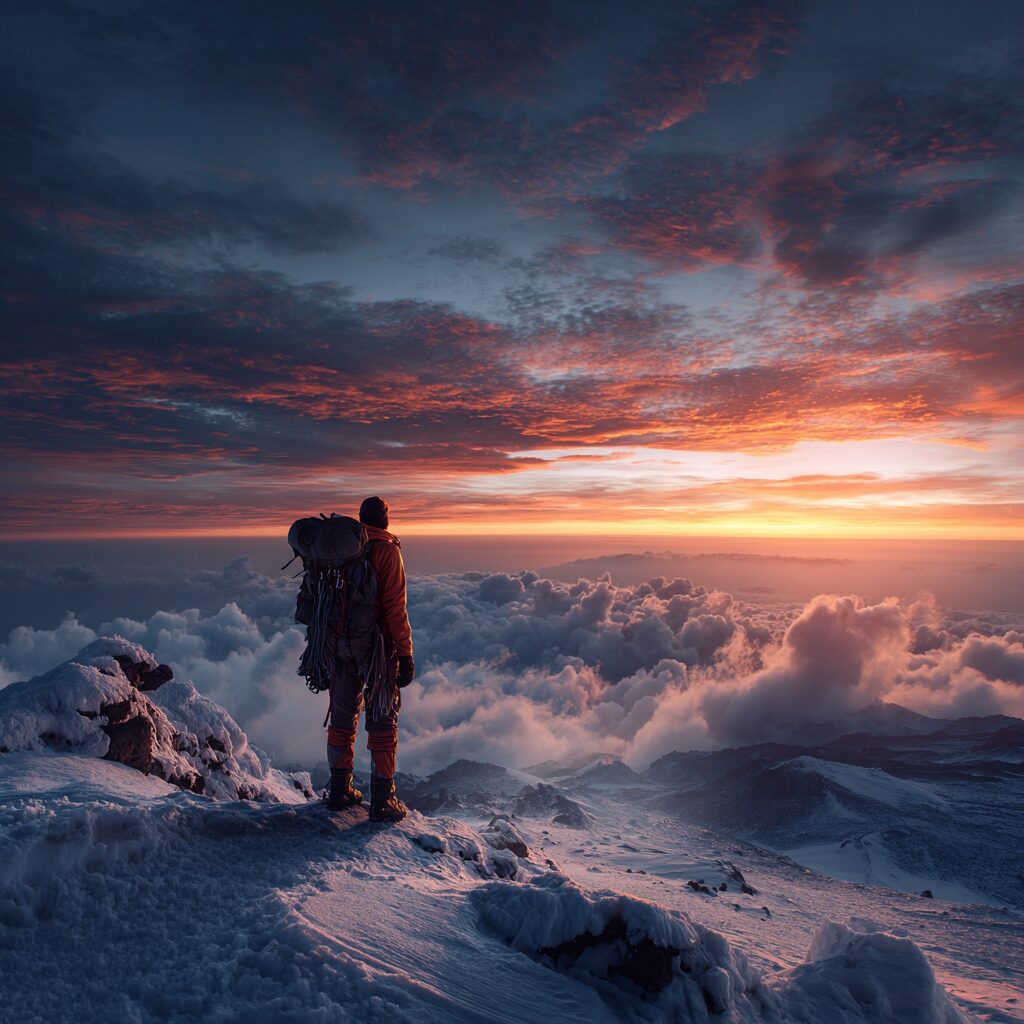
Mt. Kilimanjaro rises 19,341 feet above Tanzania, near the Kenyan border — the tallest mountain in Africa and an extinct volcano crowned with ice. The climb is like walking from the equator to the Arctic in a matter of days. Scrubland gives way to dense forest, then alpine tundra, and finally bare rock and snow.
Scientists say the ice cap has shrunk dramatically and may disappear entirely. For local communities who rely on meltwater, that’s a serious concern. For Ted, it made the journey feel even more meaningful — a chance to witness something rare and changing.
Altitude sickness strikes many climbers. Ted, remarkably, felt strong. His climbing partner, Allan, struggled but pushed through with steady determination. Two Sherpas supported them, cooking meals and guiding the ascent.
When Ted and Allan reached the summit, most climbers would have celebrated and turned back. Not Ted. They decided to descend into the crater of the volcano itself — a bold move. The Sherpas warned them it was dangerous and chose to wait at the top.
At the crater floor, the reality hit: they had no climbing tools for the ascent back up. Loose scree slid under their boots. Every step upward seemed to push them two steps back. It was exhausting, slow, and humbling.
But inch by inch, they climbed.
And somehow, they made it back to the summit.
Joy Along the Way
Ted didn’t just love the mountain — he loved the people. He connected easily, laughing with locals and even challenging a tribal leader to a friendly leg-wrestling match, to the delight of everyone watching.
Eventually, the climb ended, and Ted returned home — luggage still missing. Weeks later, his suitcase finally completed its own journey, traveling from Africa to Addis Ababa and eventually back to Denver.
Ted had already moved on.
Because for Ted, the real baggage was never in the suitcase — it was the fear he left behind on the runway, and the limits he left behind on the mountain.
Leave a Reply